Aug 2026



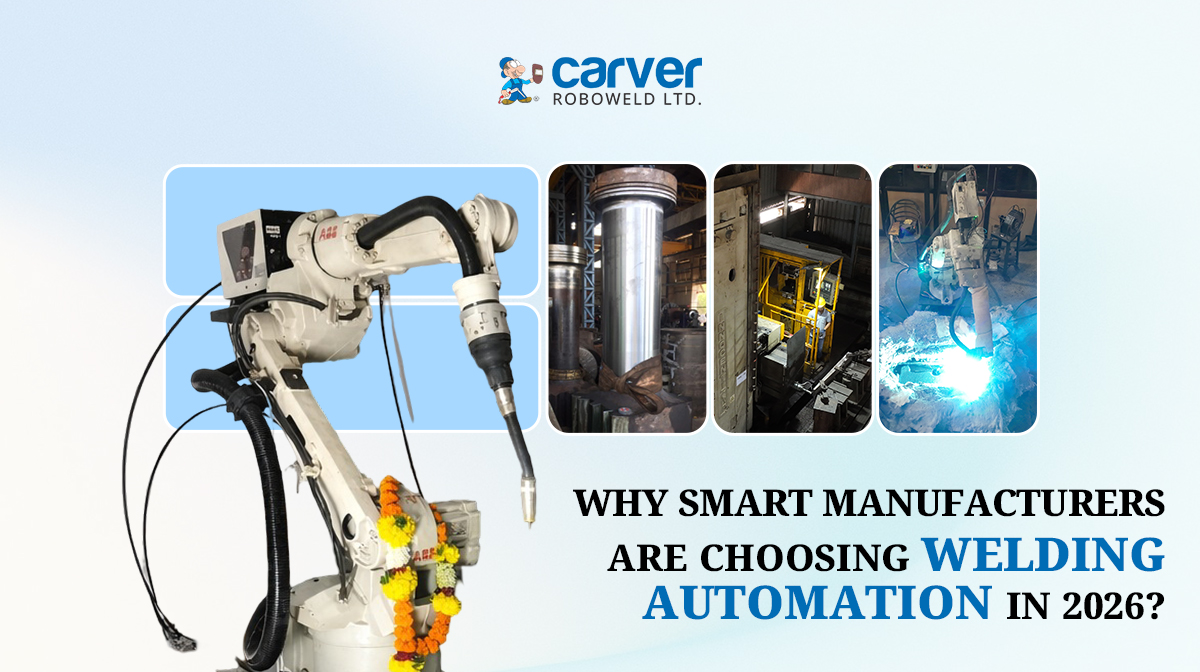
Welding automation is not an idea for the future anymore, it is something that is really happening now. The number of stories about it just keeps growing. Lots of small companies are using robotic welding systems and it is making a big difference. They are getting work done making better products using their workers more wisely and being more competitive. All kinds of businesses from machine shops, to huge companies that make big machines and cars are seeing the real benefits. Here we are going to look at some examples of how robotic welding is changing the way things are made for both small and big companies. Welding automation and robotic welding are really making a difference.
Small Shop Success: Collaborative Robotics in Action
Siouxland Fabricating — Increased Productivity with Cobots
Siouxland Fabricating Inc. Is a company in Iowa that makes custom things. They have around 50 to 100 people working for them. The company had a problem that a lot of places have: they did not have skilled welders and they needed to get more work done without spending a lot of money on new equipment.
The company did not want to use the robots that you usually see in factories because these robots need a lot of time to be programmed and they take up a lot of space. So Siouxland Fabricating Inc. Decided to use welding robots, which are also called cobots.
They used the UR10e cobots with the BotX welding system. This really helped Siouxland Fabricating Inc. Because they were able to get rid of the bottlenecks, in their welding process their work started to flow better. The Siouxland Fabricating Inc. The company was able to improve their process flow a lot by using the cobots.
What made the difference? The system’s ease of use and intuitive setup meant welders could program and run the cobot without deep robotics expertise. This freed up welders for higher value tasks while the robot efficiently handled repetitive welds. The result was not only faster cycle times but a more flexible production environment that expanded capacity without hiring additional staff.
Processed Metal Innovators
In Wisconsin a company called Processed Metal Innovators had some problems. They did not have skilled welders working for them. Because of this they had to say no to work a lot. This was because they just did not have the people to do it. The old way of welding was not an option for them either. It was too expensive. It was not a good way to get things done when they had to make a lot of different things in small amounts. So Processed Metal Innovators started using robots called cobots like the UR10e, with BotX Welders. These robots helped them with welding tasks. They did not need to build safety walls around the robots or program them in a really specific way. Processed Metal Innovators used these cobots to automate their welding tasks. It worked out well for them.
The results were transformative: the company could quote more jobs, reduce lead times, and strategically scale operations without being bottlenecked by labor shortages. This is a powerful real world example of how automation can support, not replace, existing workforce capacity.
Machine Shop Integration — Safety and Efficiency Gains
There is a machine shop in Florida. This shop has about 50 to 60 employees. They made their work a lot better by using welding cells. These are called Motoman ArcWorld solutions. They are really good for welding things that’re hard to do and have to be done many times.
The shop used to do welding by hand for auger flights. This was very hard on the workers. It also made air that was not healthy to breathe. The workers were not very happy.
After they got the system the shop saw:
Kawasaki Motors Manufacturing
The Kawasaki Motors Manufacturing Corp in the United States has a great story about how they have been successful for a long time. They started using Kawasaki arc welding robots to make frames for all terrain vehicles and four wheelers over thirty years. Now robots do 80 percent of the welding work. This is because robots are good at doing welds that’re hard for people to do by hand or that do not turn out the same every time. Kawasaki Motors Manufacturing Corp uses these robots for welding because they are consistent and do a job. Kawasaki arc welding robots have been a help to the company.
Investing early in reliable robotics helped KMM maintain competitive production levels, dramatically reduce welding inconsistencies, and mitigate labor shortages. Over time, these robots have proven durable, reliable, and adaptable. A robot installed in 1997 ran more than 38,000 operating hours with minimal maintenance and was repurposed over years for different welding tasks.
Industrial Trailer Production
Titan Trailers, a manufacturer serving the hauling and earth moving sectors, also leveraged robotic arc welding to handle high volume production tasks. Automating welding for components like aluminum and steel couplers and swing door assemblies brought measurable improvements in both productivity and product quality. By integrating robotic systems capable of precise, repeatable welds, the company enhanced throughput and maintained design integrity across critical structural components improving customer satisfaction and operational margins in the process.
Common Themes Across Success Stories
1. Workforce Augmentation, Not Replacement
Robots are really helpful to manufacturers whether they are small or large. Robots do not take the place of workers, they just help them do their jobs better. The people who used to do the work now get to be in charge and make sure everything is okay. They check the quality of the work. Try to make the process better. Meanwhile the robots do the difficult tasks that people do not want to do. This way robotics helps the workforce, it does not replace the workforce.
2. Improved Quality and Consistency
Robotic systems do a good job of making welds that are the same every time and are of very high quality. This is something that’s very hard to do with manual methods especially when you are working with parts that have a lot of complicated shapes or when you have to make a lot of them. Automated welding helps to reduce the number of mistakes that are made. It makes you feel more confident that all of the products are going to be consistent. Robotic systems and automated welding are very good at doing this kind of work.
3. Scalability and Flexibility
From cobots in shops to fully integrated industrial cells in large factories robotic welding scales to fit the business needs of companies. Robotic welding can handle a lot of jobs with a small number of items and it can also handle big production runs with a lot of items. This means robotic welding offers a lot of flexibility to support the growth of companies like these and robotic welding is very good at this.
4. Mitigating Skilled Labor Shortages
The biggest benefit that keeps coming up is that it helps with the problem of not having experienced welders. When it gets really hard to find people who’re good at welding machines can help companies keep making things without sacrificing quality or missing deadlines. This is especially important for welding because it is very hard to find people who’re really good at it. Welding is a skill and when companies use machines to do the welding it helps them to keep producing things.
Robotic welding is no longer a futuristic dream; it’s a proven, ROI driven solution that’s reshaping how fabrication gets done. At Carver Roboweld, this shift is seen every day in real production environments, where tailored robotic welding solutions help both small machine shops and multinational manufacturers achieve measurable improvements in productivity, quality, and long term competitiveness that define modern manufacturing.