Oct 2026



A welded component may look flawless from the outside, yet its actual performance depends on what happened beneath the surface during welding. The way filler metal melts, how the base material responds to heat and how the weld deposit cools can determine whether a joint performs reliably or develops problems during service.
For manufacturers working with forging dies, heavy machinery, automotive components and industrial equipment, welding is an engineering decision rather than just a joining operation. The consumable, welding method and operating conditions must work together.
At Carver Roboweld, this relationship is particularly important because welding electrodes, metal cored wires and robotic welding solutions serve different industrial requirements. Understanding their individual roles helps manufacturers make better decisions about weld quality, productivity and component life.
When an electric arc is established between the welding electrode or wire and the workpiece, concentrated heat melts the required metal. The molten material forms a weld pool, which gradually solidifies as the heat source moves forward.
During this short process, several metallurgical changes take place. The base metal near the joint experiences heating and cooling, while the deposited material develops its own microstructure.
The final result depends on factors such as material composition, cooling rate, heat input and the compatibility of the filler metal with the component.
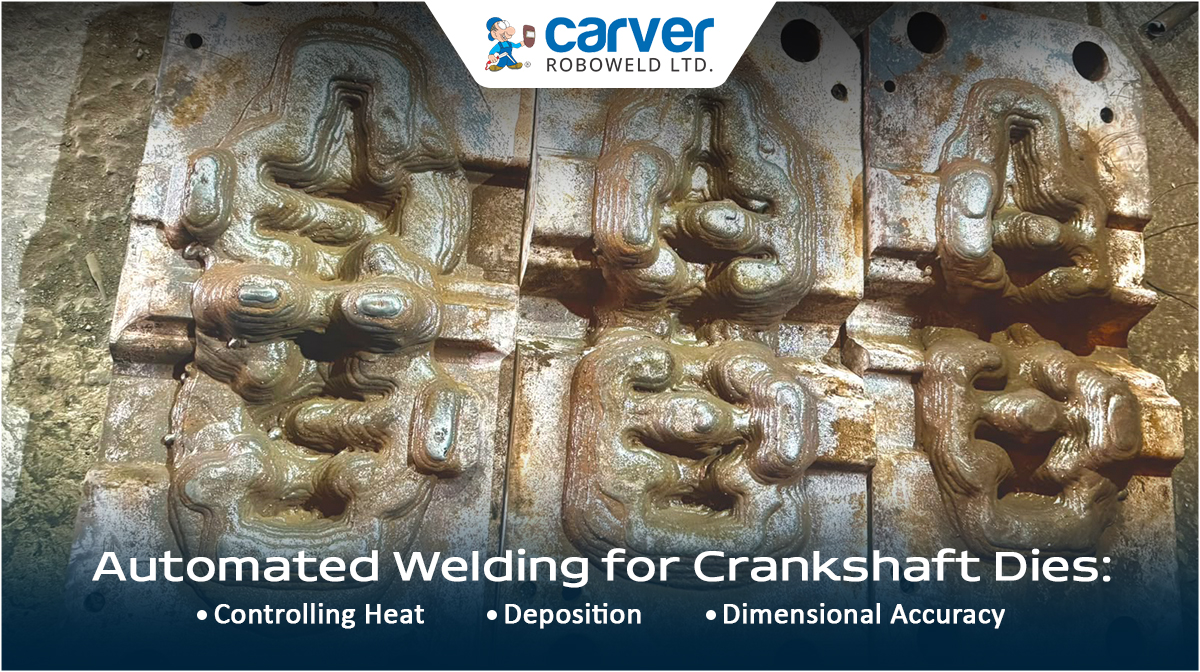
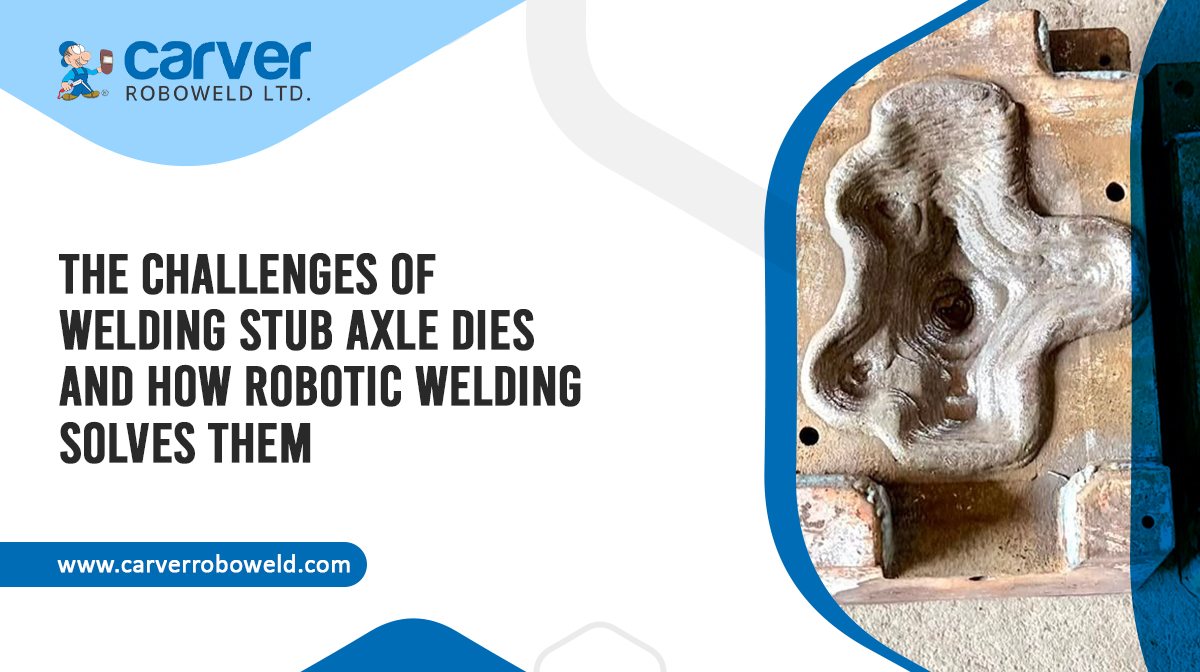
This becomes especially important when repairing forging dies or restoring worn engineering components. A weld must do more than fill an empty area. It must provide suitable hardness, strength and resistance to the working conditions the component will experience.
Not every welding electrode is suitable for every industrial application. Different components require different deposited metal properties.
For example, a mild steel fabrication job has different requirements from rebuilding a hot work forging die that repeatedly experiences pressure and elevated temperatures.
Electrode selection should consider the base material, service conditions, required hardness, mechanical properties and subsequent heat treatment.
Carver Roboweld manufactures specialised welding electrodes for industrial requirements, including products such as CARVER 9525 E, CARVER 9525 LH and CARVER 9535 E.
For applications involving tool and die restoration, the correct consumable selection and welding procedure are particularly important. Preheating, interpass temperature control and post weld heat treatment may be necessary depending on the alloy and component specifications.
The objective is to obtain a weld deposit that performs appropriately alongside the original material.
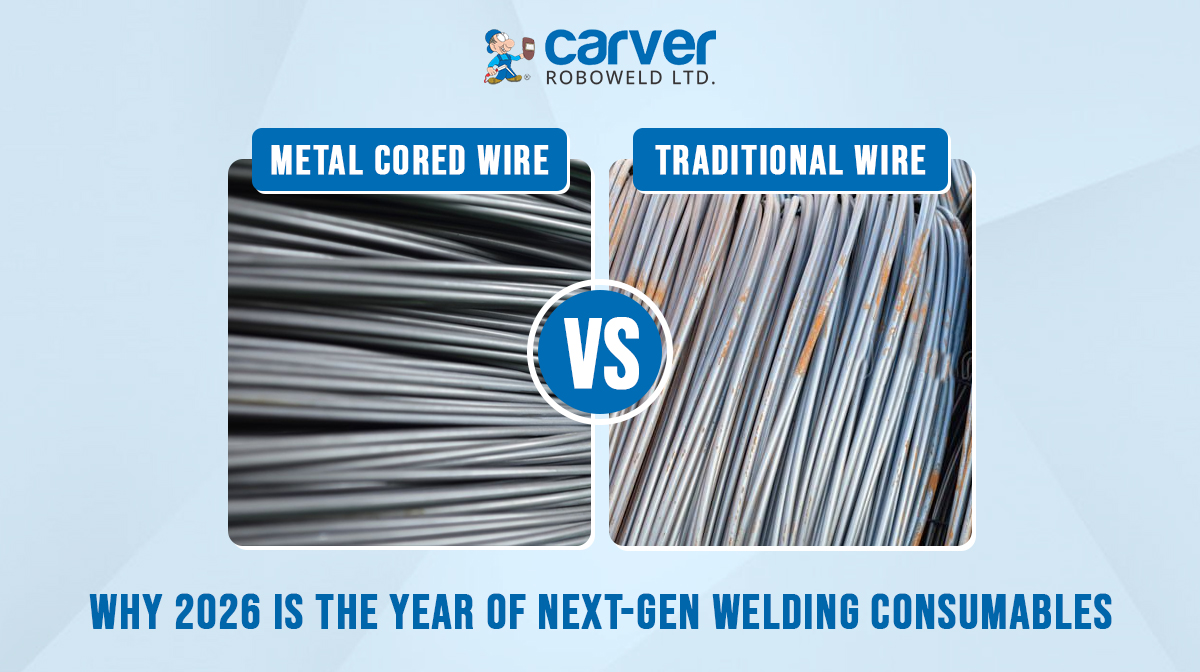
Metal cored wire works differently from conventional solid welding wire. Instead of having a completely solid cross section, it consists of a metallic outer sheath surrounding a specially formulated powdered core.
This construction allows manufacturers to develop wire compositions for particular deposition and welding requirements.
In production environments, metal cored wire can be valuable where higher deposition rates, controlled bead formation and reduced spatter are important.
Carver Roboweld offers several metal cored wire grades, including CARVER 9525 MCW, CARVER 9535 MCW, CARVER 9540 MCW, CARVER 9580 MCW and CARVER 9592 MCW.
These products are available in different sizes, including 1.6 mm and 2.4 mm, depending on the grade.
For robotic welding, consumable consistency also matters. Uniform wire feeding and predictable arc behaviour help maintain stable production conditions across repeated welding cycles.
A suitable electrode or wire cannot compensate for incorrectly selected welding parameters. The operating settings determine how the consumable behaves and how heat is introduced into the component.
Current and voltage: These influence arc characteristics, melting behaviour and penetration. Their correct combination depends on the consumable, material thickness and welding position.
Travel speed: Torch movement determines how long heat acts on a particular section. Excessive speed can leave insufficient fusion, whereas slow movement may increase heat input and distortion.
Wire feed speed: In continuous wire processes, feed speed must be coordinated with the power source settings to maintain a stable arc and appropriate metal deposition.
Shielding gas: Gas composition and flow influence arc behaviour and protect the molten weld pool from atmospheric contamination.
Interpass temperature: During multi pass welding, the temperature between successive passes must be controlled to achieve the intended metallurgical properties.
An interesting example is the CARVER 9580 product’s published technical guidance. Its recommended metal cored wire current ranges are 270–320 A for 1.6 mm wire and 330–370 A for 2.4 mm wire. These are product specific recommendations, not universal settings for every welding application.
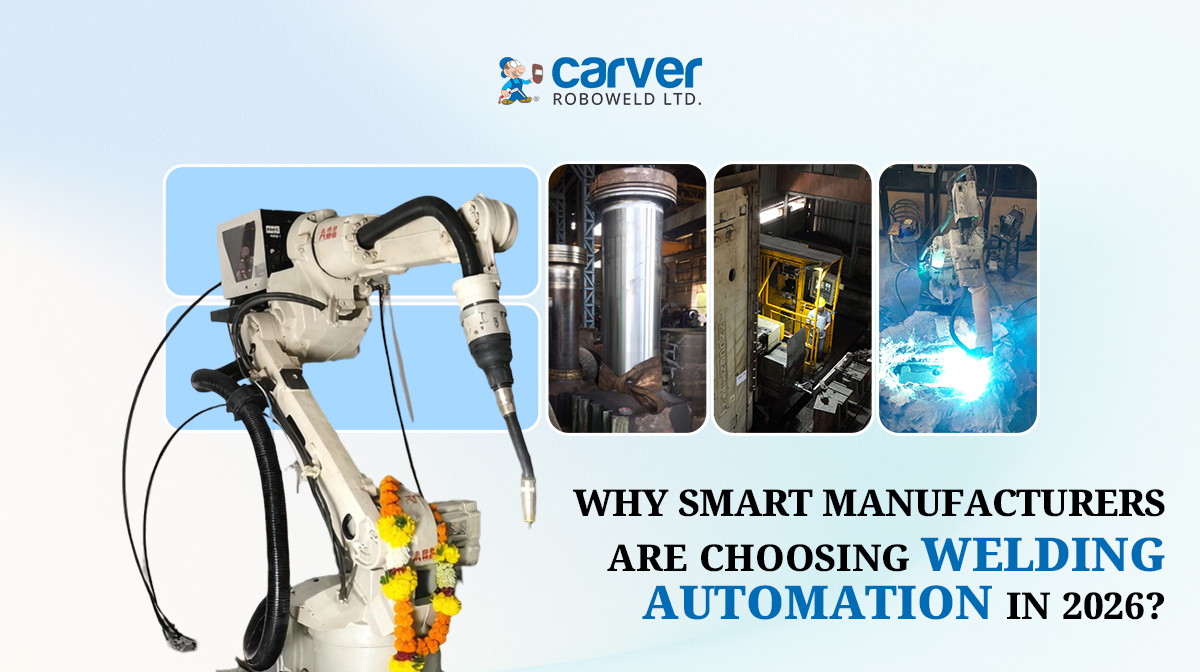
Robotic welding improves control over torch movement, positioning and repeated operations. However, a programmed welding path alone cannot guarantee a satisfactory result.
The wire must feed consistently, the fixture must hold the component accurately and the welding parameters must suit the joint geometry.
This is why consumable selection and process development should be considered together when introducing automation.
Carver Roboweld provides robotic welding cells alongside specialised welding consumables. Its automation capabilities include customised fixtures, MIG and TIG welding integration, offline programming and technical support.
Combining appropriate consumables with controlled robotic operations helps manufacturers establish repeatable welding procedures for demanding production requirements.
A successful weld should be evaluated by more than its appearance. Depending on the application, manufacturers may need to consider visual inspection, dimensional accuracy, hardness testing, mechanical testing and non destructive examination.
The inspection method should match the component’s service requirements and applicable quality standards.
Ultimately, welding performance comes from understanding the relationship between material behaviour, consumable composition and process control.
The science behind a dependable weld begins long before the arc is switched on. Choosing the correct electrode, understanding the construction of metal cored wire and establishing suitable welding parameters are all essential parts of the process.
For industries where component reliability and production efficiency matter, these decisions can influence both manufacturing costs and long term equipment performance.
Carver Roboweld continues to support industrial welding requirements through its range of specialised electrodes, metal cored wires and robotic welding solutions, helping manufacturers approach welding with greater technical control and confidence.