Aug 2026



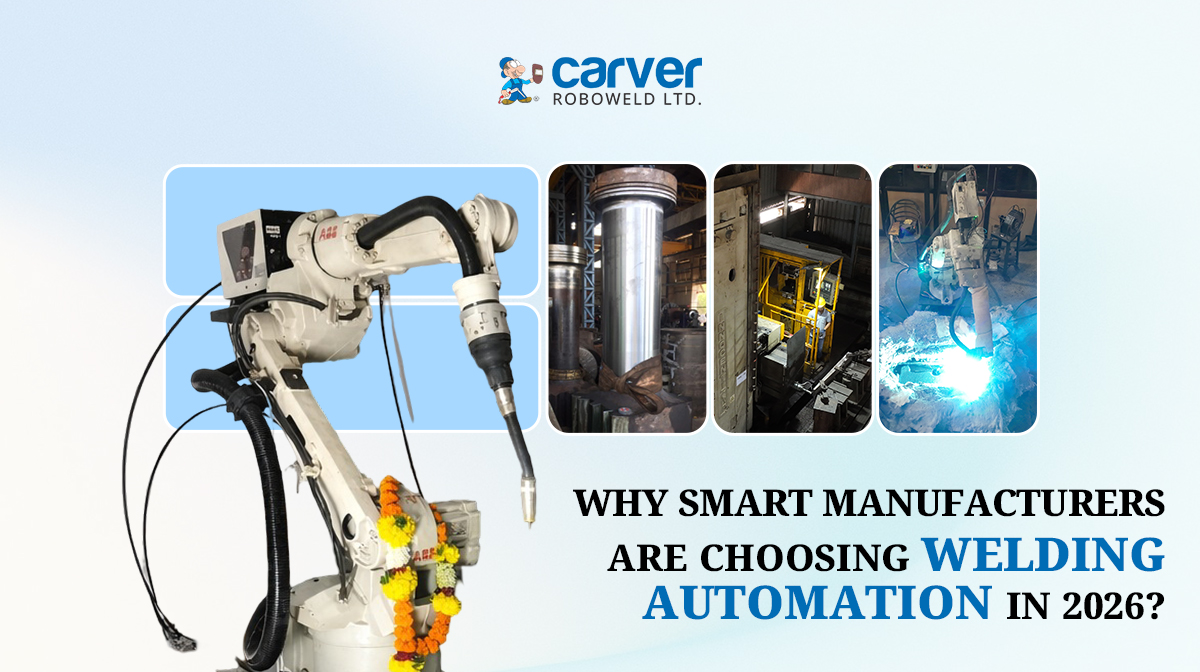
The welding automation market has become essential for advanced manufacturers since 2026 after they initially considered it an optional technology. Companies that use robotic welding systems in heavy industry and automotive assembly and precision fabrication sectors achieve better productivity and lower costs while delivering higher product quality than their rivals. The Carver RoboWeld facility leads the industry with its robotic welding solutions and complete manufacturing services which show us how welding automation transforms industrial processes while providing businesses with sustained development opportunities. The article examines the reasons which lead modern manufacturers to adopt welding automation while showing how this new trend matches current global manufacturing requirements.
The Industrial Context: Why 2026 Marks a Tipping Point
Welding automation adoption follows macroeconomic trends which drive manufacturing operations to adopt new automated systems:
1.The world needs more high quality products which manufacturers should produce in large quantities.
Manufacturers face continuous demands to produce higher quantities of products within reduced timeframes. The automated welding systems deliver better production capacity and operational uniformity which manual methods fail to achieve.
2.Skilled labor shortages and rising workforce costs
Welding exists as a traditional artisanal skill which needs extensive manual crafting for people to learn. The reduction of skilled welders in various regions creates a situation where businesses must automate their operations to maintain their workflows.
3.Required regulations and safety standards
The tightening of workplace health rules has led to faster adoption of automated systems for dangerous tasks which protect workers from welding arc exposure and harmful fumes and extreme heat.
4.Technological maturation of automation hardware and software
The development of welding automation systems now progresses through sensor technology and AI powered process controls and modular robotic systems which provide manufacturers of all sizes with automated welding solutions that work without any complications.
Core Advantages Driving Adoption
1. Dramatic Gains in Productivity and Throughput
The operating capabilities of automated welding systems permit continuous operation without showing any signs of exhaustion which human workers typically experience. Robots running throughout the day and throughout the night maintain stable operations which results in increased production rates and reduced equipment downtime during manufacturing procedures. The system handles operational tasks throughout the day which results in operational output increases which organizations need to achieve their production targets during busy periods of their operational calendar.
Non value added time for manual welding operations decreases when work on welding automation systems begins. The outcome produces more welds every shift together with improved operational speed and their work schedule becomes easier to foresee.
The automated welding systems create a welding process that enables manufacturers to achieve operational excellence through their precise welding capabilities which consistently maintain complete welding quality.
2. Unmatched Precision and Consistency in Weld Quality
In industrial welding applications particularly automotive and heavy equipment manufacturing repeatability and quality are paramount. Automated welding systems maintain exact arc paths, consistent heat input, and precise torch placement across thousands of cycles, eliminating the variability inherent in manual welding.
The product consistency results in improved product quality which leads to reduced operational costs through less need for rework and scrap materials. The implementation of robotic welding systems serves as the essential component which manufacturers need to achieve ISO standards and their specific industry requirements for quality control.
3. Long Term Cost Efficiency
The total cost of ownership to operate robotic welding cells over their lifetime generates strong return on investment because their initial capital costs require substantial investment.
The total lifecycle cost of automated welding systems proves to be substantially lower than manual welding systems when production runs reach extensive scale according to manufacturing reports.
4. Enhanced Workplace Safety
Welding creates dangerous conditions because it produces extreme heat and ultraviolet radiation and airborne particles and hazardous chemical emissions. Robotic welding cells maintain a secure environment by keeping dangerous materials inside designated work areas which decreases the risk of human contact with these hazards.
The implementation of automation protects workers while it enhances workplace safety procedures which results in reduced workplace accidents and decreased costs for workers who receive compensation. Automated welding systems provide safety benefits that support ESG (environmental, social, governance) performance goals which organizations need to achieve.
5. Operational Flexibility and Scalability
The modern welding automation systems which manufacturers use today employ modular design. The system design allows manufacturers to adapt their production processes according to the requirements of different product lines and batch sizes and design variations.
Robotic cells include intuitive programming interfaces which enable operators to switch between different tasks without needing lengthy downtime or additional engineering work.
Manufacturers gain competitive advantages in ever changing market conditions through this flexibility which allows them to quickly switch between making different product variants or introducing new products.
Emerging Trends in Welding Automation for 2026
Automation trends emerge through several technological developments which show ongoing progress toward automated systems.
The manufacturing process gains future advanced solutions through these innovations which boost operational efficiency.
Carver RoboWeld’s Role in Welding Automation
Carver RoboWeld provides automation solutions which match the specific needs of different customers. The company develops industrial solutions which fulfill precise operational needs through its heavy duty robotic welding systems and complete deployment support services.
Custom Configured Robotic Cells: The system enables businesses to achieve operational efficiency from the first day through its development of robotic cells which match their unique welding requirements and production needs.
Precision Engineering: Our robotic systems deliver repeatability and accuracy that meet the strict quality expectations of automotive, heavy machinery, and structural fabrication industries.
End to End Support: The company provides complete support to manufacturers which includes programming and installation as well as maintenance and optimization throughout their entire automation development process.
Carver RoboWeld uses its industry knowledge and dedication to research and development to assist manufacturers who want to achieve better results through improved quality and productivity and enhanced safety.
Conclusion: Welding Automation as a Competitive Advantage
The year 2026 establishes welding automation as an essential operational method which enables businesses to compete in their respective markets. The implementation of robotic welding systems provides manufacturers with the following advantages:
Welding automation offers industrial leaders who prioritize growth and operational efficiency and organizational resilience a direct path to achieve their objectives. The team at Carver RoboWeld collaborates with manufacturers to ensure their transition process operates smoothly while our advanced welding automation systems power their future manufacturing facilities.